Booking Amount to Registration: Avoid These Costly Mistakes Before Registration
Paying the booking amount is the moment when buying a home starts to feel real. It is exciting, emotional, and often overwhelming. However, for many buyers, especially in ready-to-move-in homes, the phase that follows between booking and registration is the most financially stressful part of the entire journey.
Understanding what happens after the booking amount is paid helps buyers prepare better. This phase involves arranging large sums of money in a short time, coordinating loans, and managing personal savings. In this blog, we break down the financial pressure buyers face during this phase and explain how certain purchase structures can ease the burden.
- 1 Booking Amount: The First Financial Commitment
- 2 What Happens After the Booking Amount Is Paid
- 3 Why the Booking-to-Registration Phase Feels Heavy
- 4 Booking Amount and RERA Rules for Refund of Booking Amount
- 5 Loan Processing After Booking Amount: The Uncertain Window
- 6 A Typical Ready-to-Move Financial Scenario
- 7 A Financially Eased Journey: ASBL Spectra’s Approach
- 8 Booking Amount Still Matters, But the Stress Reduces
- 9 Conclusion: Booking Amount Is Small, but the Phase Is Big
- 10 FAQs
Booking Amount: The First Financial Commitment
The booking amount is paid to block a specific home. It confirms the buyer’s intent and starts the formal purchase process.
In Hyderabad, booking amounts typically range between ₹5 lakhs to ₹10 lakhs for premium ready-to-move-in homes. While arranging this amount itself requires planning, most buyers are able to manage it with savings or short-term funds.
The real challenge begins after this step.
What Happens After the Booking Amount Is Paid
Once the booking amount is paid, buyers enter a short but intense financial phase. This period usually includes:
- Arranging the remaining down payment
- Preparing for stamp duty and registration charges
- Finalising home loan approvals and disbursement
- Managing liquidity without blocking all savings
In ready-to-move-in homes, this entire process often happens within 30-45 days, which increases pressure.
Why the Booking-to-Registration Phase Feels Heavy
The stress during this phase is not about the total cost of the home. It is about timing.
Most buyers can afford the home over time through EMIs. However, arranging large amounts together within a short window creates anxiety. Buyers often feel financially stretched, even when their long-term affordability is strong.
This is why many buyers describe the booking-to-registration phase as more stressful than paying EMIs later.
Booking Amount and RERA Rules for Refund of Booking Amount
Buyers often ask about RERA rules for refund of booking amount, especially during this phase.
Under RERA:
- Builders can deduct a nominal amount if a buyer withdraws
- Refund timelines are defined
- Terms must be clearly mentioned in the agreement
While RERA rules for refund of booking amount provide protection, most buyers hesitate to cancel once they have crossed the booking stage, due to emotional and financial commitment.
Loan Processing After Booking Amount: The Uncertain Window
After paying the booking amount, buyers usually initiate home loan processing. This involves document checks, valuation, and approvals.
During this time, buyers worry about:
- Whether the loan amount will be sufficient
- Whether disbursement will happen on time
- How much personal cash will still be required
Any mismatch between expectation and approval increases stress.
A Typical Ready-to-Move Financial Scenario
In a common ready-to-move purchase:
- Booking amount: ₹5-10 lakhs
- Registration scheduled within weeks
- Buyer must arrange:
- Stamp duty
- Registration charges
- Remaining down payment
This often means arranging ₹25-80 lakhs in a short span. Even financially stable buyers find this phase uncomfortable.
Unveil the 50-50 payment plan
A Financially Eased Journey: ASBL Spectra’s Approach
The phase between booking amount and registration is where most buyers feel maximum pressure. Understanding this, ASBL Spectra, a ready-to-move-in residential project in Hyderabad’s Financial District, restructured its purchase flow to reduce this burden.
Buyers can block a home with a ₹5 lakh booking amount, without immediately arranging large additional funds. Charges such as GST, stamp duty, and registration are paid by the developer, which significantly lowers the buyer’s immediate cash requirement.
How This Changes Loan and Cash Flow
In a typical ready-to-move purchase, banks fund around 60-65% of the total cost, because GST and registration are paid separately by the buyer.
At ASBL Spectra:
- The sale deed value is structured differently
- Banks are able to fund close to 90% of the value
- The buyer’s personal cash requirement drops sharply
This allows buyers to preserve savings and move forward with confidence.
Financial Comparison: Normal Purchase vs ASBL Spectra Structure
Normal Ready-to-Move Purchase
- Flat value: ₹2.3 Cr
- GST @ 5%: ₹11.25 L
- Registration & stamp duty @ 7.5%: ₹17.11 L
- Other charges: ₹4.69 L
Total cost: ₹2.63 Cr
- Loan: ₹1.77 Cr
- Buyer’s own funds: ₹80.86 L
ASBL Spectra Purchase Structure
- Sale deed value (restructured): ₹2.65 Cr
- GST paid by buyer: ₹0
- Registration paid by buyer: ₹0
Total cost: ₹2.65 Cr
- Loan: ₹2.35 Cr
- Buyer’s own funds: ₹26.5 L
To know more about ASBL Spectra offer: ASBL Spectra
What Improves for Buyers Between Booking and Registration
This structure directly addresses the most stressful phase of buying a ready-to-move home:
- Upfront cash requirement reduces drastically
- Loan coverage improves, reducing dependency on savings
- Financial pressure eases during registration
- Buyers make calmer, more confident decisions
Instead of scrambling for funds, buyers can focus on completing documentation and planning their move.
Booking Amount Still Matters, But the Stress Reduces
The booking amount remains an important commitment. However, the financial pressure that usually follows is significantly lower when upfront cash requirements are reduced.
This makes the journey from booking to registration smoother and more predictable.
Conclusion: Booking Amount Is Small, but the Phase Is Big
The booking amount may look small compared to the total home value, but the phase that follows is financially intense. Between booking and registration, buyers face their biggest cash-flow challenge.
Understanding this phase and choosing buyer-friendly purchase structures can transform a stressful journey into a confident one. When financial pressure reduces, buyers can focus on what truly matters, owning the right home with peace of mind.
FAQs
1. What happens after paying the booking amount?
Buyers arrange down payment, process loans, and prepare for registration.
2. Is the booking amount refundable under RERA?
Yes, subject to deductions mentioned in the agreement and RERA guidelines.
3. Why is the booking-to-registration phase stressful?
Because large payments are required within a short time.
4. Does a home loan cover registration charges?
Usually no. These charges must be paid separately.
5. How can buyers reduce stress during this phase?
By planning early and choosing structures that reduce upfront cash burden.
Own Your Dream Now! 3 BHKs in Kokapet | Ready to move | Premium Lake Facing Apartments

Live Where You Work | Spacious 3 BHKs in the Heart of the Financial District | From ₹2.25 Cr .
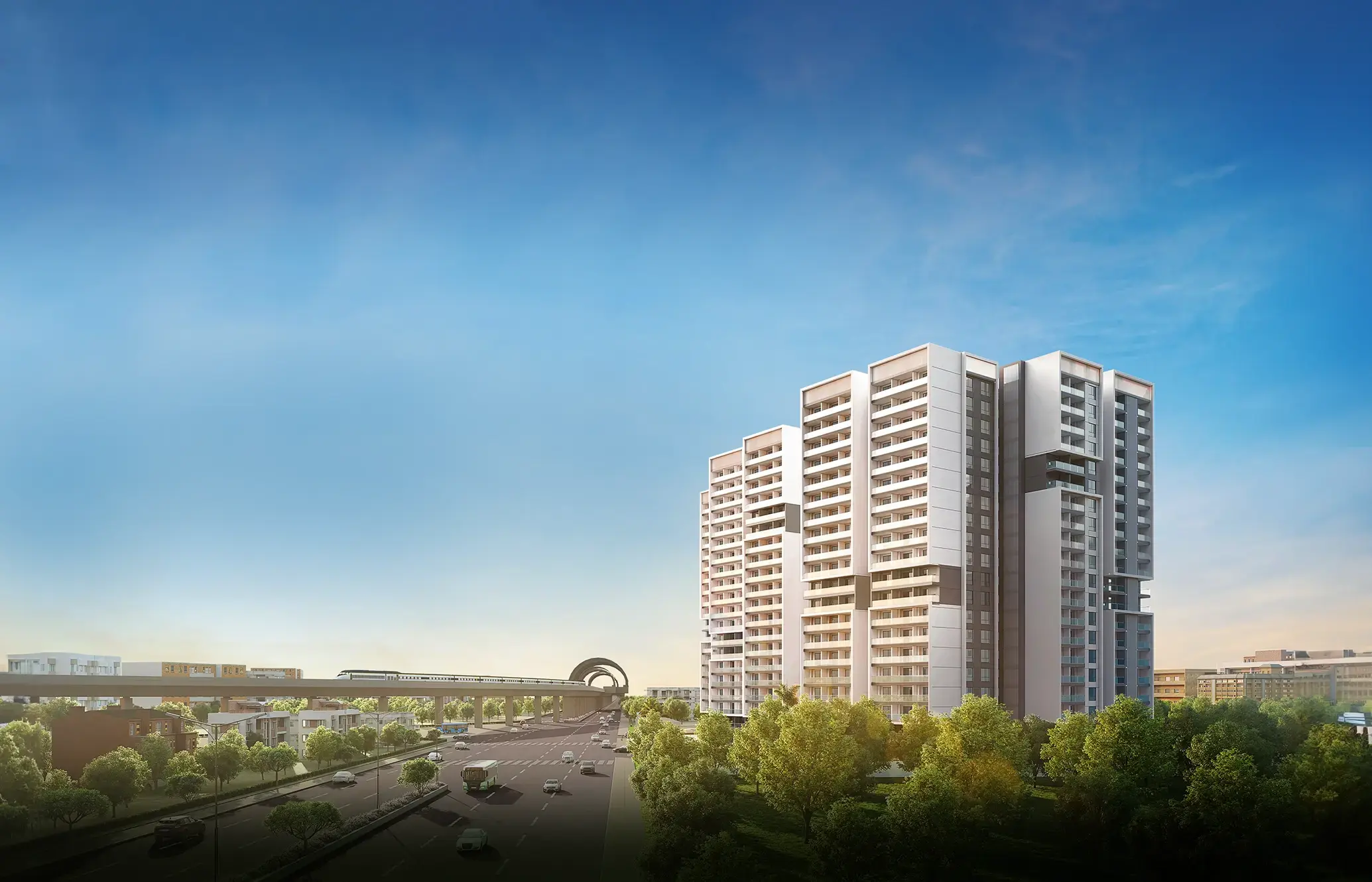

Exclusive 3BHKs | Experience the city’s rhythm in Financial District | Starting at 2.5 Crs
Our Projects
Own Your Dream Now! 3 BHKs in Kokapet | Ready to move | Premium Lake Facing Apartments
Live Where You Work | Spacious 3 BHKs in the Heart of the Financial District | From ₹2.25 Cr .
Exclusive 3BHKs | Experience the city’s rhythm in Financial District | Starting at 2.5 Crs